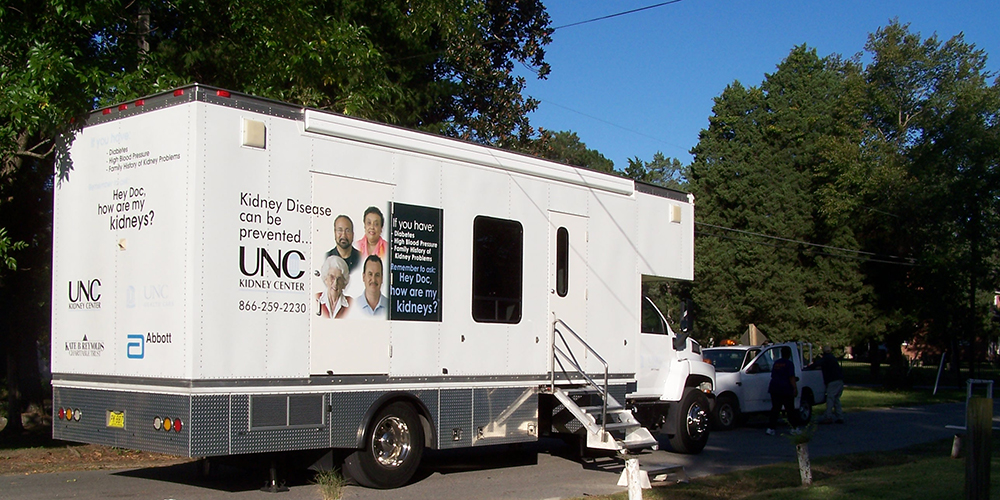

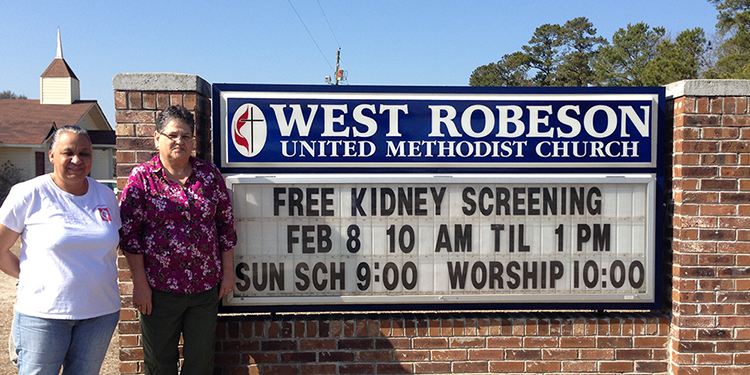
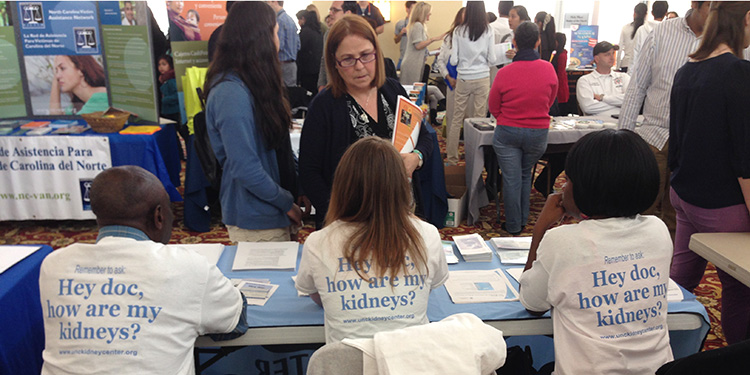
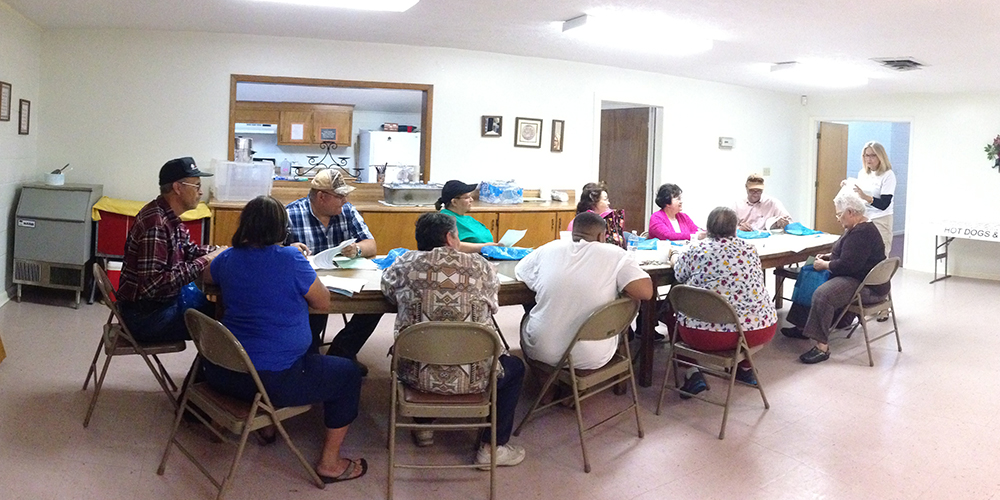
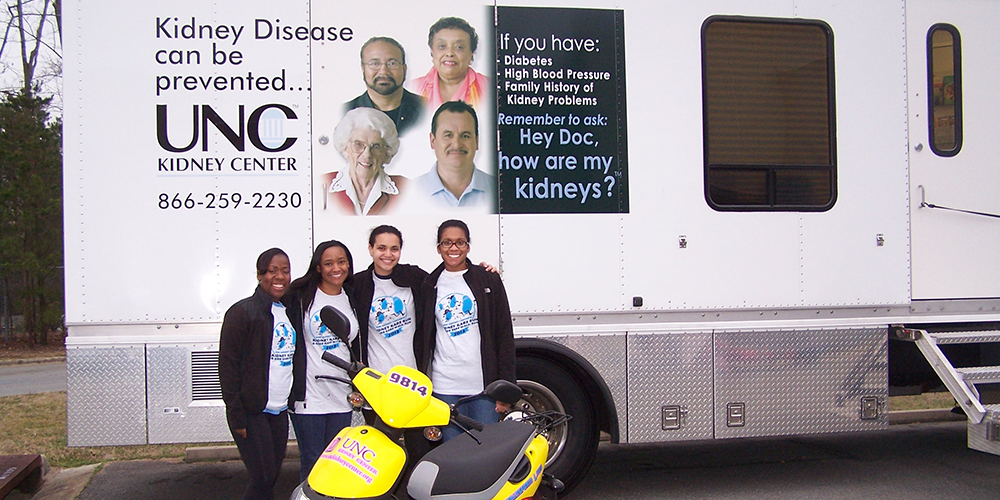
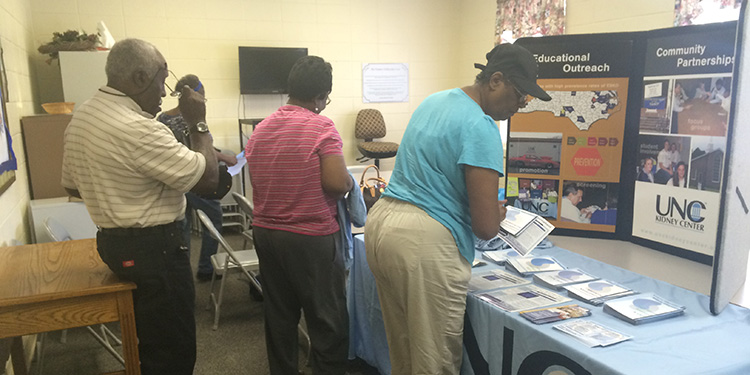
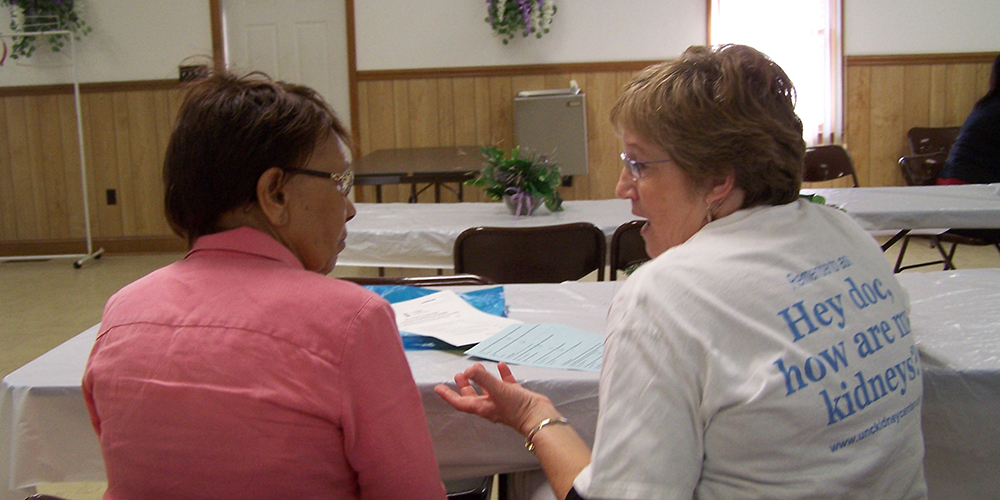

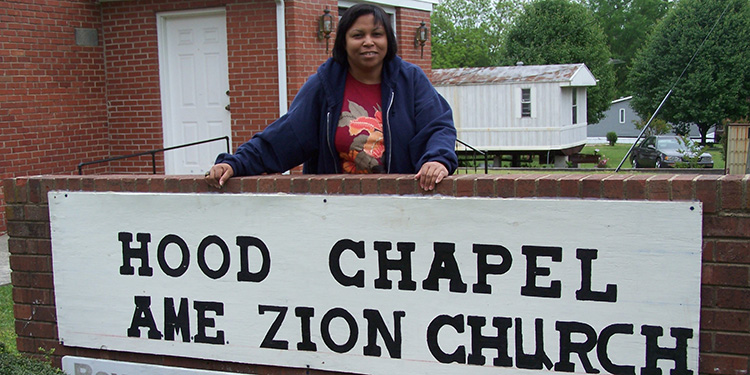
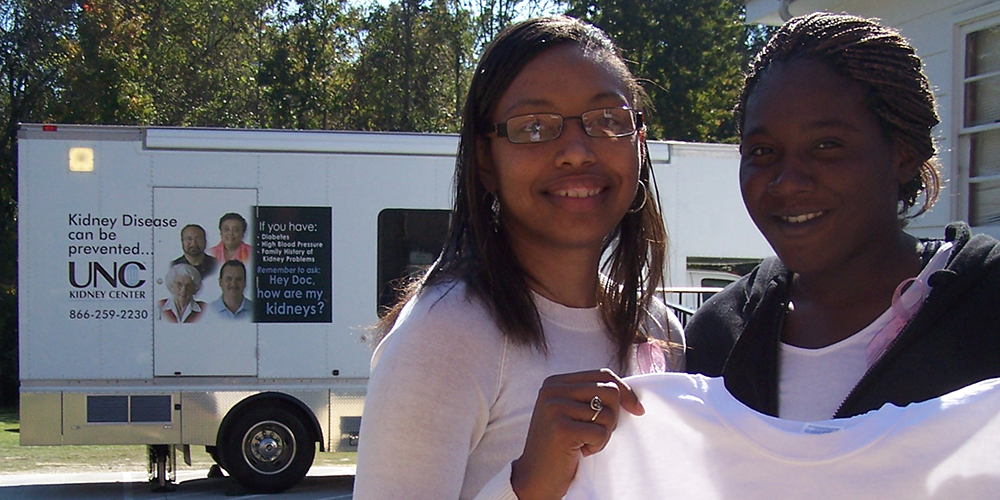
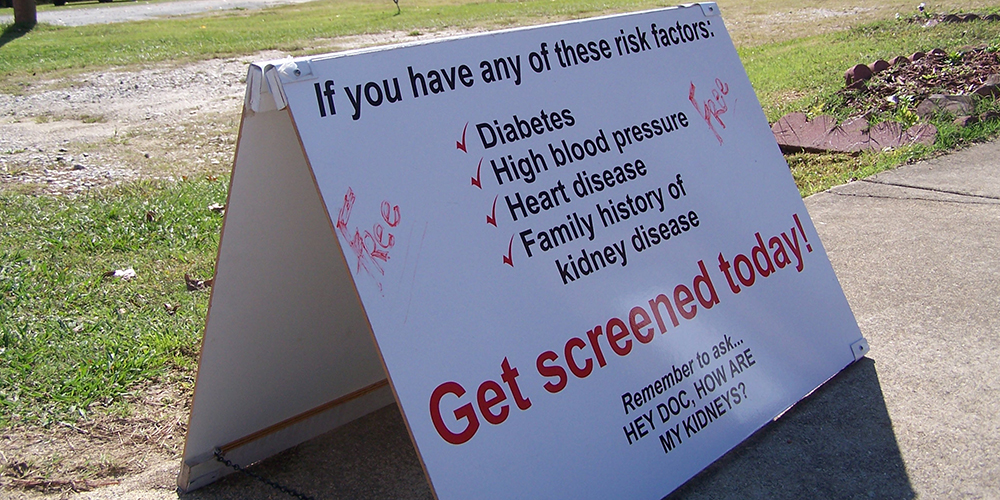
One in nine North Carolinians has Chronic Kidney Disease (CKD), including the 15,000 who have end-stage kidney disease and require dialysis. Awareness about personal risk factors for developing CKD and knowledge about how the kidneys function encourage persons to remember to ask, “HEY DOC, HOW ARE MY KIDNEYS?”® before CKD’s clinical symptoms are apparent—when intervention can slow or stop CKD’s progression.
The KEOP’s activities are evidence and community-based, and focus on the counties that have higher prevalence rates of persons with end-stage kidney disease (see KEOP map). However, we collaborate with all communities that agree to host local conversations and/or screening events.
Our primary interventions to raise awareness about CKD and to promote the important role of organ donation for persons with end-stage kidney disease include:
- CKD Screenings
- Community Conversations
- Media Campaigns
Mission Statement
The mission of the UNC Kidney Center’s Kidney Education Outreach Program is to reduce the burden of kidney disease on patients, families and the community in North Carolina.
Goals
For Patients and Families
- Increase awareness and understanding about kidney disease and organ transplantation.
- Conduct targeted screenings to test for risk and presence of Kidney Disease.
- Overcome barriers and enhance facilitators for preventing and managing Kidney Disease.
For Healthcare Providers
- Increase current knowledge and understanding of Kidney Disease among health care providers.
- Be a resource to facilitate the care of patients with Kidney Disease.
For Communities
- Engage and empower communities to create efficient mechanisms and practices for preventing and managing Kidney Disease.
- Help communities develop community-based sustainable programs to curb the burden of Kidney Disease.